Speed reading is real in a limited way, because you can learn to read faster and skim well, but reading thousands of words a minute with full understanding is not something research supports.
At a Glance
- Most adults read nonfiction silently at 175 to 300 words a minute, about 238 on average
- Practice can raise that, but more speed usually means less detail
- Skimming is a real skill, but it is not the same as reading every word
- The limit is how fast you understand language, not how fast your eyes move
What People Mean by Speed Reading
The phrase covers a lot of different things, and that is part of why people argue about it. When someone says speed reading, they might mean any of these.
- Reading a bit faster by cutting distractions and rereading less
- Skimming, which means looking for the main ideas and skipping the rest on purpose
- Using a pacer, like a finger or a pen that moves along the line
- One word at a time apps, which flash words in one spot
- Big claims of reading whole pages at a glance
The first four are real. The last one is where things fall apart.
What the Research Found
On January 14, 2016 a team of reading scientists led by Keith Rayner published a long review called How Do We Read, and Can Speed Reading Help?
It looked at decades of work on how eyes and brains handle text (Rayner and team, 2016).
The short version is a tradeoff. You can go faster, and you will understand less detail as you do. Skimming gets you through text faster with only fair understanding, which is fine when you just need the gist. The review found no trick that gets around the tradeoff. It said readers are unlikely to double or triple their speed, from around 250 to 500 or 750 words a minute, and still understand as well.
Its advice for people who want to read faster was plain. Become a better reader. Read more, learn more words, and know more about the topic. Those things make every page faster, because your brain has less work to do on each word.
A large 2019 review of many reading studies by Marc Brysbaert put the average silent reading speed for adults at about 238 words a minute for nonfiction and about 260 for fiction (Brysbaert 2019). That is a useful baseline, and we break it down in what is the average reading speed. You can check your own number with the free reading speed test.
Why the Big Claims Fall Apart
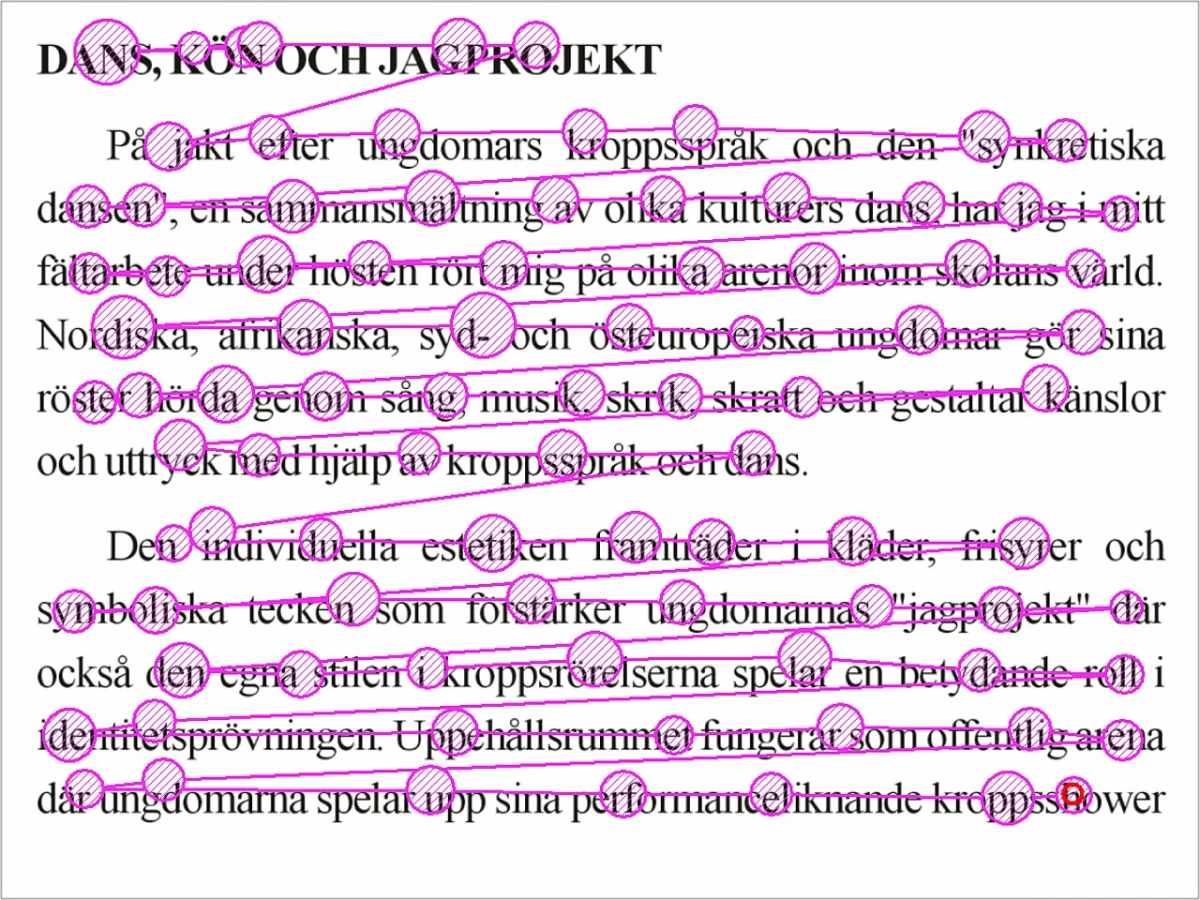
Your eyes only see a small window sharply at any moment. The fovea, the sharp center of vision, covers only about the central two degrees of what you see, so your eyes have to keep moving as you read. Outside that window, letters blur. That is why you cannot take in a whole line, let alone a whole page, in one look.
Even if you could see more, your brain would still need time to turn the words into meaning. That step is the real bottleneck. Moving your eyes faster, or not at all, does not speed it up much.
The 2016 review put it plainly. Speed reading or skimming gets you through text faster with only moderate understanding. Stories about famous fast readers come from anecdotes rather than tests anyone can check.
If you cannot say what you just read, it was not reading. It was looking.
What Is True About Reading Faster
Plenty of people do read faster after some practice. Here is where those gains usually come from.
- Less rereading from drifting. A lot of slow reading is your mind wandering while your eyes keep going, then going back. A pacer or a one word at a time reader cuts this down.
- Fewer distractions. A phone on the table costs more speed than any technique can win back.
- Reading with a goal. If you know what you want from a text, you can move quickly through the parts that do not matter to you.
- Practice. Readers who read a lot are faster, partly because they know more words and recognize them instantly.
None of these will get you to 1,000 words a minute with full understanding. Together they can make a real and lasting difference.

Where Tools Like Rot Reader Fit
We built Rot Reader, so take this with that in mind. A one word at a time reader is honest when it tells you what it does and what it does not do.
What it does is remove eye movement and set a steady pace. That helps with drifting, and many people find it easier to stay focused. What it does not do is make your brain understand faster. If you set it too high, you will watch words go by and remember nothing.
The research backs that up. A 2017 study found modern speed reading apps did not foster reading comprehension (American Journal of Psychology). A 2014 study found that when readers could not look back at words they had passed, they understood less (Psychological Science, 2014). That is why the reader has rewind on pause, a stop at every sentence option, and a context panel that shows where you are in the paragraph. They exist to protect understanding, not speed. You can read more about the settings on the free speed reader page, or learn the background in what is RSVP reading.
So Should You Bother?
Yes, if your goal is modest and honest. Going from 220 to 300 words a minute on everyday reading is a big gain. Over a year it adds up to many extra books or a lot of saved time at work.
No, if you are hoping to read a dense textbook in an afternoon with full recall. Nothing does that. For hard material, slow and careful still wins.
For practical steps, see how to read faster.
Questions
Is speed reading a real skill?
Partly. Reading somewhat faster and skimming well are real skills you can practice. Reading thousands of words a minute with full understanding is not supported by research.
Does speed reading hurt comprehension?
Usually, yes, once you go well past your natural speed. Research keeps finding a tradeoff where more speed means less detail. Small gains on easy material cost very little.
What is the trick to speed reading?
There is no single trick. The gains people see mostly come from rereading less, cutting distractions, reading with a clear goal and reading more often so words are easier to recognize.
What is a realistic reading speed goal?
A modest gain, such as 240 to 300 words a minute on everyday material, is a sensible goal. The 2016 review found doubling or tripling your speed with full understanding unlikely. Check that you still understand what you read at the new speed.
Do speed reading apps work?
They help some people stay focused and keep a steady pace. They do not make your brain understand faster, so set the speed close to your real reading speed and raise it slowly.
Sources
- Rayner, K., Schotter, E. R., Masson, M. E. J., Potter, M. C. and Treiman, R. (January 14, 2016). So Much to Read, So Little Time. How Do We Read, and Can Speed Reading Help? Psychological Science in the Public Interest, 17(1), 4 to 34. doi.org/10.1177/1529100615623267
- Brysbaert, M. (2019). How many words do we read per minute? A review and meta-analysis of reading rate. Journal of Memory and Language, 109. doi.org/10.1016/j.jml.2019.104047
- Schotter, E. R., Tran, R. and Rayner, K. (2014). Don’t Believe What You Read (Only Once). Comprehension Is Supported by Regressions During Reading. Psychological Science, 25(6), 1218 to 1226. doi.org/10.1177/0956797614531148
- Acklin, D. and Papesh, M. H. (July 2017). Modern Speed Reading Apps Do Not Foster Reading Comprehension. The American Journal of Psychology, 130(2), 183 to 199. doi.org/10.5406/amerjpsyc.130.2.0183
- Fovea centralis, Wikipedia, for how small the sharp center of vision is. en.wikipedia.org/wiki/Fovea_centralis
All sources were opened and checked on October 17, 2026. Photos are from Wikimedia Commons under the licenses named in each caption.
Try It on Something You Want to Read
Open a file or pick a free book. It runs in your browser and nothing is uploaded.