RSVP reading means rapid serial visual presentation, a way of reading where words flash one at a time in the same spot on the screen so your eyes never have to travel along a line.
At a Glance
- RSVP stands for rapid serial visual presentation
- Each word appears in a fixed spot, at a speed you choose
- It removes eye movement, but not the work of understanding
- It suits light reading better than dense study material
Where RSVP Came From
RSVP started in the lab, not in an app store. Psychologists used it to study how fast people can see and recognize things. They would flash pictures or words one after another and measure what people caught. It gave them a clean way to control exactly how long each item stayed in view.
Reading tools borrowed the idea much later. Around 2014 a wave of web apps made it famous, often with one colored letter in each word to show where your eye should land. A 2014 paper opened by noting the excitement those apps caused (Psychological Science, 2014). Since then many apps, browser add ons and websites have used the same trick. Rot Reader is one of them, and it is free.
How It Works on a Screen
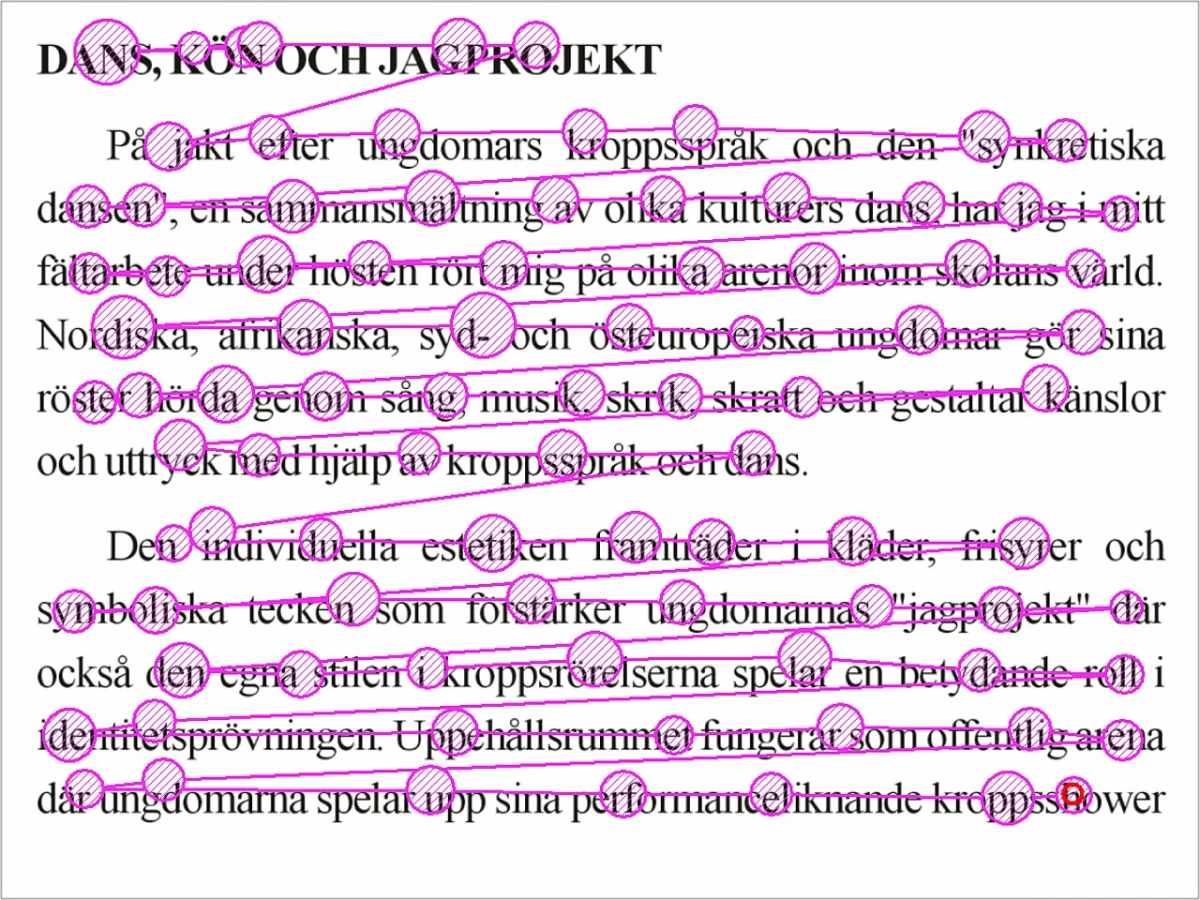
Normal reading is a series of tiny jumps. Your eyes hop a few letters forward, stop for a split second, then hop again. Now and then they slide back to check a word you missed. Most of this happens without you noticing.
RSVP takes the jumps away. The words come to your eyes instead of your eyes going to the words. A good RSVP reader does a few more things to make that feel natural.
- A focus letter. One letter in each word is lined up with the same point on screen, usually a little left of the middle of the word. That is roughly where your eye wants to land anyway.
- Uneven timing. Long words, numbers and the ends of sentences stay up a little longer than short words. A flat beat feels robotic and is harder to follow.
- A speed control. You set the words per minute and change it as you go.
Rot Reader does all three. You can also show two or three words at a time, or a full sentence on a desktop, if a single word feels too choppy. The free speed reader page has a live demo of each setting.
Why People Like It
The first time you try RSVP it can feel like a cheat code. There is nothing to hunt for and nothing to skip. Your attention has one job, which is to take in the next word.
That helps in a few real ways.
- It stops drifting. On a page, your eyes can keep moving while your mind wanders off. With RSVP, if you stop paying attention, you notice right away.
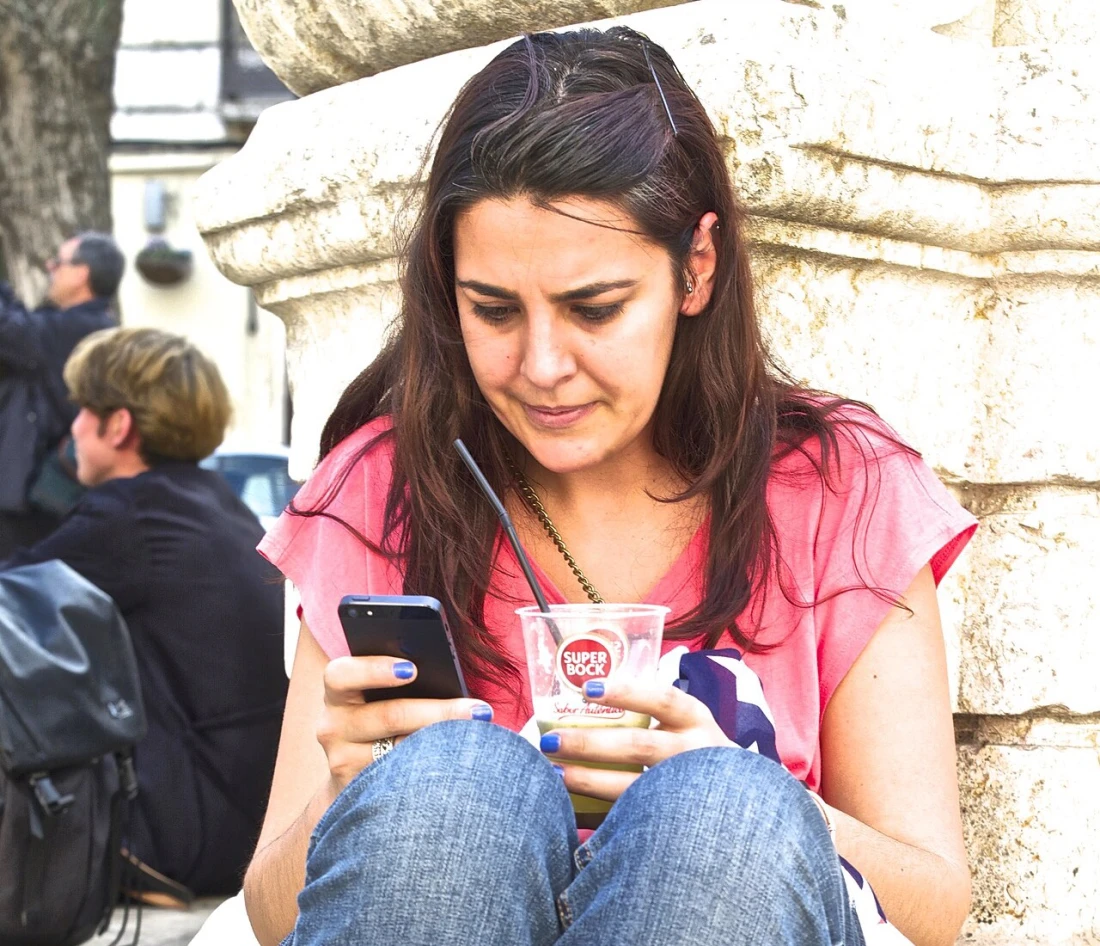
- It fits small screens. One word in big type is easy to read on a phone. A dense page shrunk to phone size is not.
- It sets a steady pace. You can push the speed a little at a time and feel the change.
What the Research Says
As of October 2026, this is the part most RSVP apps leave out. Taking away eye movement does not take away the hard part of reading, which is understanding the words. Your brain still has to turn each word into meaning and fit it into the sentence.
There is also a cost. When you read a page, you reread small bits now and then. In a 2014 study, Elizabeth Schotter, Randy Tran and Keith Rayner hid each word once a reader's eyes moved past it, so nobody could look back. Understanding dropped, and not only on tricky sentences (Psychological Science, 2014). RSVP takes those looks back away unless the tool gives you a way to go back.
A 2017 study of speed reading apps put its finding right in the title, Modern Speed Reading Apps Do Not Foster Reading Comprehension
(American Journal of Psychology). And a large 2016 review called How Do We Read, and Can Speed Reading Help?
found a tradeoff between speed and accuracy. It said readers are unlikely to double or triple their speed, from around 250 to 500 or 750 words a minute, and still understand as well (Rayner and team, 2016).
RSVP is a tool for moving through text. It is not a way to understand more in less time.
That does not make it useless. It means you should pick the right material and keep a way to step back.
Where RSVP Helps and Where It Does Not
| Material | How RSVP does |
|---|---|
| Light fiction | Very well. The story carries you and small misses do not matter much. |
| News and blog posts | Well. Most of the point is the main idea. |
| Long emails and reports | Well, if you slow down for the numbers. |
| Textbooks | Mixed. Use one word at a time and a low speed, and stop often. |
| Tables, math and code | Poorly. These need you to look around the page. |
| Poetry | Poorly. Line breaks and layout are part of the meaning. |
How to Try RSVP Without Losing the Thread
- Find your real speed first. The free reading speed test checks that you understood the passage, not just how fast you clicked.
- Start a little above that number. If you read at 250 words a minute on paper, try 300 on screen. Not 600. For scale, the average adult reads nonfiction silently at about 238 words a minute (Brysbaert 2019).
- Turn on rewind on pause. In Rot Reader settings you can make every pause jump back to the start of the sentence. That gives you back the reread that RSVP takes away.
- Keep the context open. Press C and the paragraph shows under the word, with your spot lit up. Click any word to jump there.
- Practice on something easy. A novel from the free books shelf is a better place to learn than a work report.
Give it a week of short sessions before you decide. It feels strange for the first few minutes, then it either clicks or it does not.
Questions
Is RSVP the same as speed reading?
Not quite. Speed reading is a broad name for many methods, like skimming and using a pacer. RSVP is one specific method where words appear one at a time in a fixed spot. Many speed reading apps use it.
Does RSVP reading help you understand more?
No. Research has found that it helps you move through text faster but does not improve understanding, and it can lower it at high speeds. It works best on easy material and with a way to step back.
What speed should I use for RSVP?
Start just above your normal reading speed. For most adults that means somewhere around 250 to 350 words a minute. Raise it by small steps only when you can still sum up what you just read.
Can I use RSVP on a PDF or an ebook?
Yes. Rot Reader opens PDF, EPUB, Word and plain text files in your browser and plays them one word at a time. Your file stays on your device.
Is there a free RSVP reader?
Yes. Rot Reader at rotreads.com is free with no account. It also has a shelf of free public domain books to practice on.
Sources
- Rayner, K., Schotter, E. R., Masson, M. E. J., Potter, M. C. and Treiman, R. (January 14, 2016). So Much to Read, So Little Time. How Do We Read, and Can Speed Reading Help? Psychological Science in the Public Interest, 17(1), 4 to 34. doi.org/10.1177/1529100615623267
- Schotter, E. R., Tran, R. and Rayner, K. (2014). Don’t Believe What You Read (Only Once). Comprehension Is Supported by Regressions During Reading. Psychological Science, 25(6), 1218 to 1226. doi.org/10.1177/0956797614531148
- Acklin, D. and Papesh, M. H. (July 2017). Modern Speed Reading Apps Do Not Foster Reading Comprehension. The American Journal of Psychology, 130(2), 183 to 199. doi.org/10.5406/amerjpsyc.130.2.0183
- Brysbaert, M. (2019). How many words do we read per minute? A review and meta-analysis of reading rate. Journal of Memory and Language, 109. doi.org/10.1016/j.jml.2019.104047
All sources were opened and checked on October 17, 2026. Photos are from Wikimedia Commons under the licenses named in each caption.
Try It on Something You Want to Read
Open a file or pick a free book. It runs in your browser and nothing is uploaded.