Main Points
To retain what you read, close the book and test yourself, then do it again a few days later. A 2013 review of 10 study methods gave its top rating to only two, practice testing and spaced out review. It rated rereading and highlighting, the two habits most people use, as low (Dunlosky and team, 2013). Pulling an idea out of your head is what makes it stick.
Forgetting is fast at first, then slows down. A 2015 repeat of the classic memory test found the same curve as the 1885 original. Self testing and spaced review got the only high ratings in a review of 10 study methods. Rereading and highlighting got low ratings, yet they are what most students use. Rereading makes you feel more confident than testing does, even when it helps less a week later. The best gap before a review depends on how long you need to remember. For a test a week away, the best gap in one large study was 20 to 40 percent of that week. Paper beat screens in a meta-analysis of 54 studies, mostly for factual texts and timed reading. Handwritten notes are not a proven fix. A 2021 repeat of the famous laptop study did not find the longhand edge.
Why You Forget Most of What You Read
Rot Reader is a speed reader, so one worry comes up more than any other. Will I remember it? Fair question. Reading fast is pointless if nothing stays.
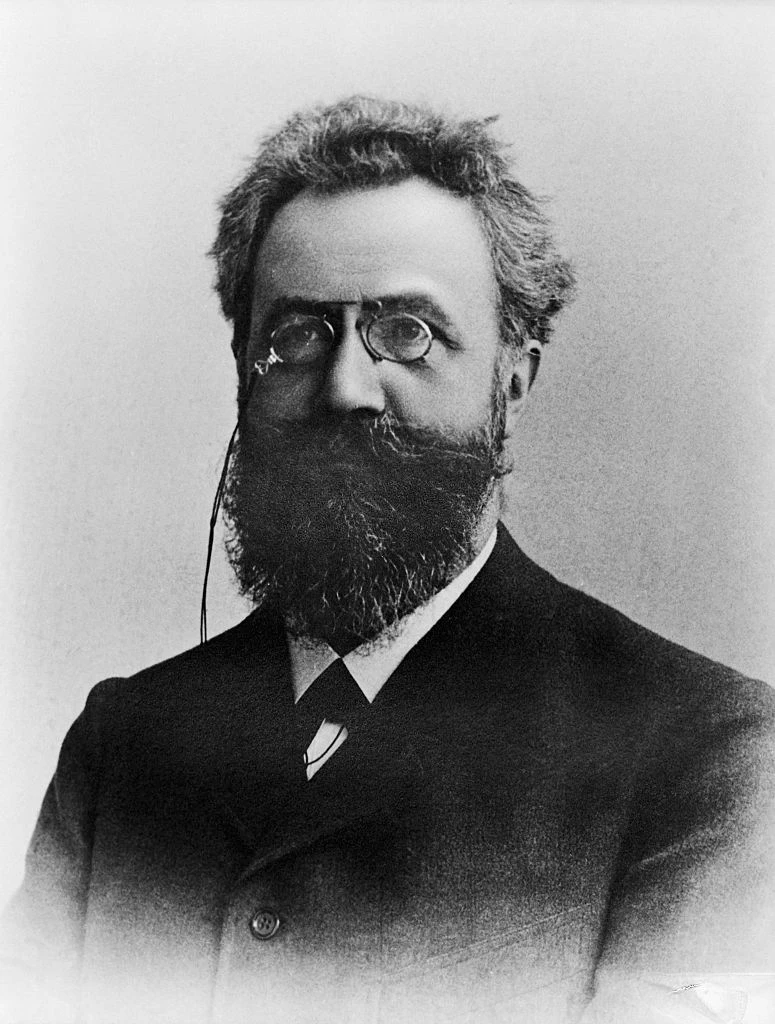
The bad news comes first. Your brain drops most new material on purpose. The first person to measure this was Hermann Ebbinghaus, a German psychologist who tested himself on lists of made up syllables in the 1880s. He learned a list, waited, then relearned it and timed how much effort he saved the second time. Less saved meant more forgotten.
In 2015 two Dutch researchers ran his test again, the same way, with one person over about 75 days and 70 lists (Murre and Dros, PLOS ONE). They got the same shape. The steep drop comes in the first hour. After that, the loss slows down a lot.
Two things in that chart matter for readers. First, the biggest loss happens before you have even put the book away for the night. Second, after a month the 2015 tester had kept almost nothing. Nonsense syllables are harder than a good book, since a story gives your brain hooks. But the lesson carries over. If you do nothing after you read, the curve wins.
The good news is that the curve is not fixed. What you do in the first day and the first week changes it a lot.
What 10 Study Methods Scored
The best single source on this question is a 2013 review by five psychologists from Kent State, Duke, Wisconsin and Virginia. They looked at 10 easy study methods across ages, abilities, materials and kinds of tests. Then they rated each one high, moderate or low (Psychological Science in the Public Interest).
| Method | What it means for a reader | Rating |
|---|---|---|
| Practice testing | Close the book and recall or quiz yourself | High |
| Distributed practice | Spread your reviews out over days | High |
| Elaborative interrogation | Ask yourself why each claim is true | Moderate |
| Self explanation | Explain how a new idea fits what you know | Moderate |
| Interleaved practice | Mix topics instead of doing one at a time | Moderate |
| Summarization | Write a summary of what you read | Low |
| Highlighting or underlining | Mark key lines as you go | Low |
| Keyword mnemonic | Link a new word to a sound alike image | Low |
| Imagery for text | Picture what the text describes | Low |
| Rereading | Go over the same pages again | Low |
Look at the bottom of that table. Rereading and highlighting are the habits most students report using, and the authors say plainly that they do not reliably boost results. Their advice is to use practice testing in place of rereading.
A low rating does not mean useless. The authors say summaries and imagery help some people on some tests. It means the payoff is less certain than the top two. A better move. Write your summary from memory, which turns it into a test.
Test Yourself Instead of Rereading
The classic proof comes from Washington University in St. Louis. In two experiments, students read short prose passages. Some reread them. Others took recall tests with no feedback, just writing down what they could remember. Then everyone took a final test 5 minutes, 2 days or 1 week later (Roediger and Karpicke, 2006).
- At 5 minutes, the rereaders did better.
- At 2 days and 1 week, the students who had tested themselves remembered a lot more.
- The trap. Rereading made students more confident they would remember, even though it worked worse later.
That last point explains why bad habits stick. Rereading feels smooth. The words look familiar, so your brain says you know this. Testing feels hard and a little embarrassing, because you see the gaps. The hard feeling is the part that works.
A 2011 study in Science pushed it further. Students who practiced recall learned more than students who built detailed concept maps. The edge held on questions that asked them to make inferences, not just repeat facts. It even held when the final test asked them to draw a concept map (Karpicke and Blunt, Science).
What this looks like for a normal reader is simple. At the end of a chapter, close the book. Say or write the three main points from memory. Then open the book and check what you missed. That is it.
When to Review, and the 2 7 30 Rule
One test is good. A second test later is much better. The question is how much later.
The biggest study on this taught more than 1,350 people a set of facts. They got one review after a gap of up to 3.5 months. Then came a final test up to a year later. The best gap grew as the final test got further away. For a test 1 week out, the best gap was about 20 to 40 percent of that week. For a test 1 year out, it was about 5 to 10 percent of the year (Cepeda and team, 2008).
The table turns that into days. The day counts are simple math on the study percentages.
| You need it in | Best gap from the study | In days |
|---|---|---|
| 1 week, like a quiz on Friday | 20 to 40 percent | Review after about 1.5 to 3 days |
| 1 year, like knowledge you want to keep | 5 to 10 percent | Review after about 18 to 37 days |
So what about the 2 7 30 rule people search for? It is a simple schedule. Review on day 2, again on day 7, and again on day 30. No study found for this page tested that exact schedule. But it lines up well with the research above. Day 2 sits inside the best window for something you need next week. Day 30 sits inside the window for something you want a year from now. It is a fine rule of thumb, as long as each review is a test and not a reread.
Advice to use spaced repetition usually stops there. The useful part is the timing. Waiting too long hurts, and so does reviewing again too soon. Reviewing the same night you read feels productive, but the 2008 study found that gaps which were too short did worse at long delays.

Paper, Screen and Notes
Paper has a small edge. A 2018 meta-analysis pooled 54 study results from 2000 to 2017 with 171,055 readers. Paper beat screens for understanding. The edge was small, but it showed up in both kinds of study design. It grew when reading was timed, held for factual texts, and did not show up for stories alone. Oddly, it got bigger in newer studies, not smaller (Delgado and team, 2018).
What to do with that. For a novel, read wherever you like. For a manual, a textbook or a report you must remember, paper is a slightly safer bet, and do not rush it.
Handwriting is not magic. A 2014 study made headlines when laptop note takers did worse on idea questions than people writing by hand. The authors blamed copying the lecture word for word (Mueller and Oppenheimer, 2014). In 2021 a team at Tufts ran the same test again with 142 students. Laptop users again typed more and copied more. But they did not score worse on the quiz, and a small pooled look at eight similar studies agreed (Urry and team, 2021).
So skip the pen versus keyboard fight. Write notes in your own words, short, and use them later as quiz prompts. That is the part that counts.
Does Reading Faster Mean Remembering Less?
Sometimes, yes. Rot Reader is a speed reading app, and the research is clear on this. A 2016 review by five reading scientists found a real trade off between speed and accuracy. Doubling or tripling your speed while keeping full understanding is unlikely. Skimming gets you through faster with moderate understanding (Rayner and team, 2016).
That is fine, as long as you choose it on purpose. Match the speed to the job.
- Read fast for news, email, light fiction and anything you only need the gist of.
- Slow down for anything you need to keep, use or be tested on.
- Either way, stop and recall. A two minute recall break at the end of each chapter does more for memory than shaving off reading time.
In Rot Reader, you can drop your words a minute for hard sections and pause at any chapter break to test yourself. To find your true starting point, take the free reading speed test. It checks your answers, so the number already counts understanding. For the real limits of fast reading, see is speed reading real.
A 10 Minute Routine for Any Book
Everything above fits into steps you can follow on your phone. It adds about 10 minutes to each chapter and a few short reviews later.
- Before you read, ask one question. Look at the chapter title and write down what you want to find out. Asking why is one of the moderate rated methods, and it gives your reading a target.
- Read without a highlighter. If a line matters, put a small mark in the margin and keep going.
- Close the book and recall. Write or say the three main points from memory. About 3 minutes.
- Check and fix. Open the book. Add what you missed in a different color, so your gaps stand out. About 3 minutes.
- Turn notes into questions. Write two or three questions you could answer next time without the book. About 2 minutes.
- Set your reviews. Put a reminder for day 2, day 7 and day 30. At each one, answer your questions from memory first, then check.
- Use it once. Explain one idea to a friend, or apply it to something real this week. Explaining is a form of recall.
Worked example. Say you read a 20 page chapter on Monday at 250 words a minute. Steps 1 to 5 add about 10 minutes. On Wednesday you spend 3 minutes answering your questions. On the next Monday you spend 3 more. A month later, 3 more. That is under 20 extra minutes for a chapter you will still know in a month. For help with the reading time itself, see how to read faster.
You Asked
Why can't I retain what I read?
Most likely because you read once, or reread, and never tested yourself. Forgetting is steepest in the first hour after learning. Rereading also makes material feel familiar, which tricks you into thinking you know it. Closing the book and recalling the main points fixes much of this.
What is the 2 7 30 rule?
It is a review schedule. You go over what you learned on day 2, day 7 and day 30. No study has tested that exact schedule, but it fits research on spacing, which found the best review gap is about 20 to 40 percent of a one week delay and 5 to 10 percent of a one year delay. Make each review a self test, not a reread.
How do you retain 90% of what you learn?
No study backs a 90 percent figure for any one method. What the evidence does support is self testing and spaced reviews, which got the top rating in a 2013 review of 10 study methods. Teaching or explaining an idea to someone is a good way to make yourself recall it.
Does highlighting help you remember?
Not much. A 2013 review of 10 study methods rated highlighting and underlining as low utility because they do not reliably improve results. A small margin mark is fine, but quizzing yourself afterward does far more.
Is it better to read on paper or on a screen to remember?
Paper has a small edge for understanding, per a 2018 meta-analysis of 54 study results with 171,055 readers. The gap was larger for timed reading and for factual texts, and it did not show up for stories alone.
Should I take notes by hand or on a laptop?
Either works. A famous 2014 study favored handwriting, but a 2021 repeat with 142 students found laptop note takers did not score worse. What matters more is putting ideas in your own words and using your notes to quiz yourself later.
For the Record
- Dunlosky, J., Rawson, K. A., Marsh, E. J., Nathan, M. J. and Willingham, D. T. (2013). Improving Students' Learning With Effective Learning Techniques. Psychological Science in the Public Interest, 14(1), 4 to 58. doi.org/10.1177/1529100612453266
- Roediger, H. L. and Karpicke, J. D. (2006). Test-enhanced learning. Taking memory tests improves long-term retention. Psychological Science, 17(3), 249 to 255. doi.org/10.1111/j.1467-9280.2006.01693.x
- Karpicke, J. D. and Blunt, J. R. (2011). Retrieval practice produces more learning than elaborative studying with concept mapping. Science, 331(6018), 772 to 775. doi.org/10.1126/science.1199327
- Cepeda, N. J., Vul, E., Rohrer, D., Wixted, J. T. and Pashler, H. (2008). Spacing effects in learning. A temporal ridgeline of optimal retention. Psychological Science, 19(11), 1095 to 1102. doi.org/10.1111/j.1467-9280.2008.02209.x
- Murre, J. M. J. and Dros, J. (2015). Replication and Analysis of Ebbinghaus' Forgetting Curve. PLOS ONE, 10(7), e0120644. doi.org/10.1371/journal.pone.0120644
- Delgado, P., Vargas, C., Ackerman, R. and Salmerón, L. (2018). Don't throw away your printed books. A meta-analysis on the effects of reading media on reading comprehension. Educational Research Review, 25, 23 to 38. doi.org/10.1016/j.edurev.2018.09.003
- Mueller, P. A. and Oppenheimer, D. M. (2014). The pen is mightier than the keyboard. Psychological Science, 25(6), 1159 to 1168. doi.org/10.1177/0956797614524581
- Urry, H. L. and team (2021). Don't Ditch the Laptop Just Yet. A direct replication of Mueller and Oppenheimer's (2014) Study 1. Psychological Science, 32(3), 326 to 339. doi.org/10.1177/0956797620965541
- Rayner, K., Schotter, E. R., Masson, M. E. J., Potter, M. C. and Treiman, R. (2016). So Much to Read, So Little Time. How Do We Read, and Can Speed Reading Help? Psychological Science in the Public Interest, 17(1), 4 to 34. doi.org/10.1177/1529100615623267
Photos are from Wikimedia Commons under the licenses named in each caption.
Read It, Then Prove You Kept It
The speed test times you and then checks what you understood. Two minutes, no account.